
What is minoxidil?
Minoxidil is a vasodilator, meaning that it dilates the blood vessels to lower blood pressure and encourage more blood flow. It was initially used to treat hypertension before being developed into a safe and effective treatment for pattern baldness and hair loss [1].
How does minoxidil work for male pattern baldness?
Minoxidil promotes hair growth by influencing the hair follicles to enter the growth phase of the hair growth cycle. It can make a new hair strand thicker, extend the growth, and increase overall hair density.
Evidence also suggests that minoxidil has resulted in larger hair follicles and longer growth periods, resulting in thicker and healthier hair [2]. This is why minoxidil users report visible improvements.
How much does minoxidil cost?
Topical minoxidil doesn't permanently stop hair loss and promote regrowth. It’s important that you have an estimate of how much you’ll probably spend per month if you decide to use topical minoxidil to know if you can sustain it.
Topical minoxidil doesn’t result in permanent scalp hair regrowth; it must be used continuously to maintain hair regrowth, if any.[3] If you are wanting a pharmacy grade treatment, the price of a 180 mL 5% minoxidil solution can be around $79, worth about three months of use. If however you would like a doctor prescribed treatment, personalised to your hair loss situation, this can cost from $29 a month.
What are the topical minoxidil side effects?
Even though topical minoxidil is considered a safe and effective treatment, there are still some side effects to be aware of. Possible reactions include irritation, dryness, itching, flaking, and reddened skin [4]. An increased risk of side effects can result from excessive topical minoxidil absorption into the body, so always consult your doctor before using it, as minoxidil can also cause reactions if overused.
Are there alternative treatments to minoxidil?
Minoxidil can be a successful treatment on its own, but there may be better results when combined with procedures prescribed by a medical professional, such as vitamins, shampoos, and other over-the-counter products.
If medical treatments are not suitable for you, there are also various other natural options. Some men combine minoxidil with hair transplant procedures. But speak with your healthcare professional about other strategies for hairline regrowth.
When should I start using minoxidil for receding hairline?
A receding hairline treatment is most effective when started early. Hair loss is caused largely by dihydrotestosterone (DHT), a growth hormone that deepens growing boys’ voices, builds muscle, and grows facial hair, and can cause male pattern baldness [5]. After puberty, though, the proliferation of this hormone can interfere with hair growth as it constricts the follicles, causing thinning and shortening of the hair at the crown.
A receding hairline can be hard to notice at its earliest stages, but the sooner you begin treatment for hairline hair loss after noticing that it is receding, the better the outcome is likely to be. If your hairline doesn't look the same in old photos versus new ones then you may already need treatment.
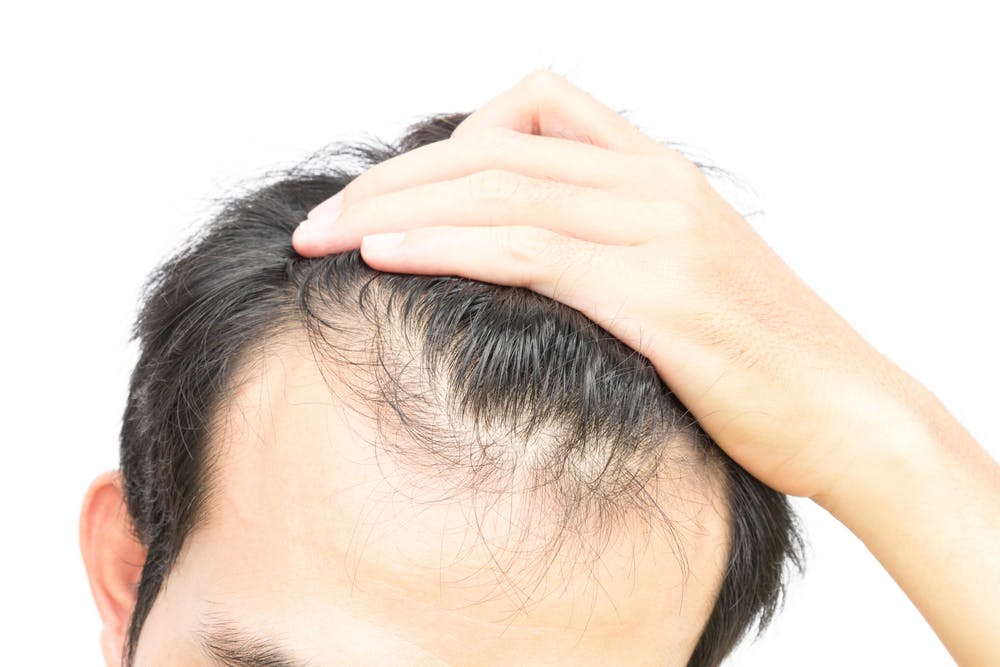
One useful way to spot the receding hairline signs is to compare old photos to more recent ones taken years apart. If you don’t have any useful pictures or just want to be more thorough, you can take selfies while pulling your hair back with your fingers or a headband.
As soon as you notice your hair thinning on your forehead, start seeking out treatment. There is a limit to minoxidil effectiveness when it comes to hairline restoration. Even if minoxidil can aid in reversing the early stages of hair loss, it may not be able to bring back a lost head of hair in its entirety.
All too frequently, people only attempt to correct hair loss when the follicles have died. If you notice symptoms of a receding hairline, don’t waste precious time researching ‘minoxidil receding hairline’ online. Consult one of our Mosh healthcare professionals, who can give science-backed advice on your situation.
Remember: Minoxidil is an effective treatment to slow down or stop hair loss, but whether or not Minoxidil is also enough for your situation depends on what stage of baldness you are at around your hairline.
How often should I apply minoxidil to my hairline?
While there are standard dosages and application procedures that apply to hair growth minoxidil products, everyone’s hairline and body might react to them differently. It can take between three and six months before changes begin to show. Your medical practitioner can advise how to apply minoxidil around your hairline for the best results.
Furthermore, minoxidil is not a one-size-fits-all solution. The right frequency of application depends on the recommendation of your physician.
Another crucial element for getting the best outcome is consistency, which requires applying the medications as recommended regularly for months before any changes appear.
Does Minoxidil Work For a Receding Hairline?
Minoxidil products may slow down or stop loss of hair or even regrow and reverse a damaged hairline, but it cannot permanently fix it. You risk losing the progress you’ve made on your hairline when you stop using it as prescribed. Whether or not minoxidil restores your hairline depends on early, consistent use and adherence to your doctor's plan.
On the flip side, you don’t want to overdo it. Follow your doctor’s instructions, and do not take the initiative to add doses yourself. Minoxidil does more than what it might say in the headlines of your ‘minoxidil receding hairline’ research.
It’s a good thing that Mosh offers doctor advice with AHPRA-registered medical professionals for individuals with subscription plans.
What is the best minoxidil for restoring hairlines?
Don’t rely on what the internet says is ‘the best product for receding hairline’ from your ‘minoxidil receding hairline’ searches.
Our medical team here at Mosh can outline the ideal complementary products, such as receding hairline shampoos, conditioners, and vitamins for hair growth during consultations.
If minoxidil is recommended for your specific hair needs, they will also help you determine the best dosage (from low-to-normal strength to stronger formulations of minoxidil that may be most effective) and the safest and most practical application method for your condition and lifestyle (topical, spray, dropper, foam).
Minoxidil foam vs Minoxidil liquid solution
Minoxidil is available in liquid and foam. The liquid contains propylene glycol, which can cause irritation, itching, scaling, and contact dermatitis, in some people. The foam formulation was developed to address this. It was generally found to be less irritating because it is propylene glycol-free [6].
Step up your hair health plan with Mosh
Mosh is a men’s health clinic that takes great pride in specialising in taboo-breaking health issues like hair loss, mental health, and erectile dysfunction, as well as skin care, weight loss, and more.
We believe that sensitive issues should never be written off because of outdated social stigmas or awkwardness. We want to break down the barriers and hassles of getting the help you need. That is why we offer online doctor advice and discreet shipping of treatment plans, if applicable, to anywhere in Australia.
Stop looking up ‘minoxidil receding hairline’ or ‘Does Minoxidil Work on Hairline Thinning?’ on the internet and start taking action. Consult a doctor through Mosh today.